
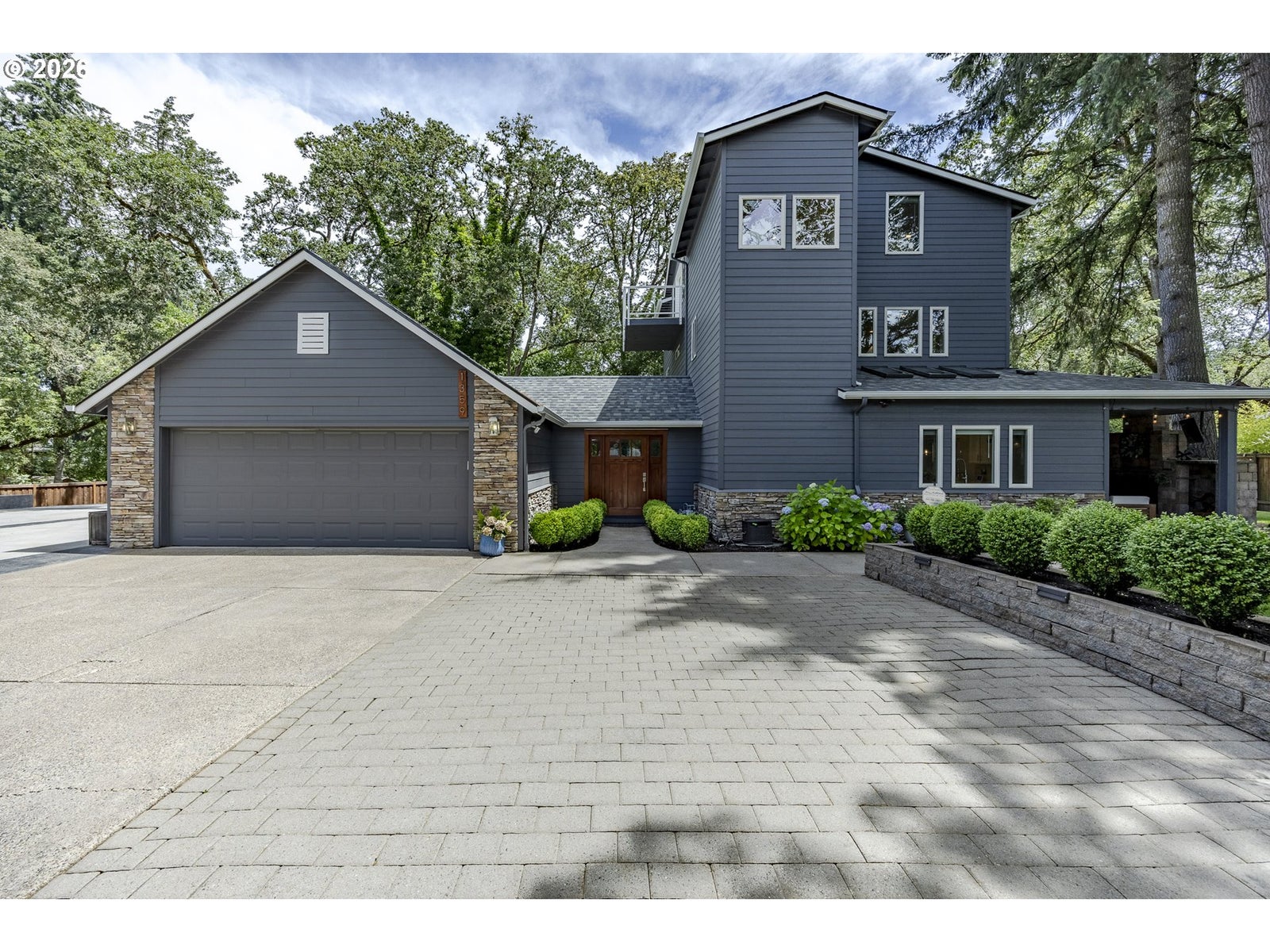
A condo can make sense in Eugene if you want fewer individual exterior-maintenance tasks or a location that suits your daily routine. A detached house can offer more private outdoor space and more direct control over maintenance. The better choice depends on the particular property, its costs, and the responsibilities you are comfortable taking on.
Compare homes you would actually consider buying. A condo's lower asking price may come with substantial association dues, while a house without dues still needs a budget for roofs, siding, landscaping, and repairs.
First, confirm what you would own
“Condo” describes an ownership arrangement, not simply a building's appearance. A townhouse may be a condominium or a separately owned property with different maintenance obligations. A detached house may also belong to a homeowners association.
Review the legal description, title information, and governing documents. Establish which spaces belong to the unit, which are shared, and how parking, storage, yards, and other areas may be used. Do not rely on a photograph or listing category to answer those questions.
Compare responsibilities alongside price
Neither arrangement removes the need to understand maintenance and future expenses. The difference is how responsibilities and decisions are divided.
| Question | Condominium | Detached house |
|---|---|---|
| Who handles exterior work? | The association may handle specified items; confirm the documents | The owner generally arranges it, subject to any association obligations |
| How are larger repairs funded? | Dues, reserves, and potentially special assessments | The owner's savings, insurance where applicable, or other funding |
| What outdoor space is available? | Private, limited-use, or common areas, depending on the property | The property's lot, subject to easements and restrictions |
| How much control do I have? | Changes and uses may need association approval | Local rules, recorded restrictions, and any HOA still apply |
| What should I inspect? | The unit and relevant information about shared systems and buildings | The house, lot, and associated systems |
Build a complete monthly comparison
For each property, list principal and interest, property taxes, insurance, any mortgage insurance, HOA dues, utilities, and a maintenance allowance. Include parking or storage charges if they apply.
Check what the dues cover before comparing totals. If water or another service is included in dues, avoid adding the same expense again. If it is excluded, leave it in your household budget.
The CFPB notes that HOA dues are usually paid separately from the mortgage payment. Confirm the actual arrangement with your lender and association. A portal's displayed mortgage estimate may not capture all the costs you will pay.
Review the association's finances and repair plans
Request the governing documents, current budget, financial statements, reserve information, recent meeting minutes, and details of approved or proposed special assessments. Ask about planned major work and how it will be funded.
A low monthly fee does not, on its own, establish that an association is well funded. Compare the maintenance obligations with the available reserves and expected work. If a roof or other major component needs replacement, understand the plan and any potential owner contribution.
Freddie Mac's condo guide explains the importance of reviewing association documents, finances, and insurance. Arrange the review within the deadlines in your agreement and ask for professional help with questions the documents do not resolve.
Confirm insurance and financing early
Have an insurance professional explain the boundary between the association's master policy and the coverage you need as a unit owner. Ask about deductibles, covered portions of the unit, personal property, liability, and available loss-assessment coverage. The existence of a master policy does not mean all your risks are covered.
Your lender may also need to review the condominium project, beyond reviewing your income and credit. Fannie Mae's condo guidance identifies building condition, financial stability, and certain legal or safety issues as relevant considerations. Ask the lender about the specific property before relying on a financing assumption.
For a detached house, get the same early clarity on insurability and loan requirements. Roof condition, unusual construction, and other property features can still affect the purchase.
Test the property against your everyday routine
Tour the route from parking to the front door. Check stairs, elevators, package delivery, storage, laundry, outdoor space, and where guests would park. If you work from home, evaluate the layout and sound at times that matter to you.
For either property type, investigate rules affecting your plans, including pets, renovations, parking, or renting. An association's rules are only one part of that review; local requirements, financing, and insurance may also matter.
Explore Cal Young and the Oakway area if that location fits your needs, and compare it with other Eugene homes for sale. Evaluate the actual walking route and services near each listing. A neighborhood label does not establish convenient access from every property.
Think about a future sale
Compare recent sales of similar properties rather than assuming houses always outperform condos or that a popular location guarantees appreciation. For a condominium, association finances, building condition, dues, and financing availability can matter to future buyers. For a house, maintenance, layout, lot characteristics, and nearby alternatives also matter.
Buy a property whose costs and responsibilities you understand today. Treat future value as uncertain when planning how long you can comfortably own it.
Compare the actual choices
Contact Melissa Stiltner and Team Burke with the properties you are considering. We can help organize a comparison of price, responsibilities, location, and the documents to review before making an offer.
Eugene condo-versus-house questions
Is a condo cheaper than a house in Eugene?+
It depends on the properties. Compare purchase price and the total monthly cost, then consider likely repairs, assessments, and moving plans. A lower price does not automatically mean lower ownership costs.
Is a condo a good choice if I travel often?+
It may reduce some tasks while you are away, depending on the association's responsibilities. You still need a plan for your unit, deliveries, emergencies, and any maintenance assigned to you.
Are all condos single-level or accessible?+
No. Check the specific unit and the full route from parking to living spaces. Building access and interior layout need to meet your requirements.
Can I rent out a condo later?+
Do not assume so. Review current association restrictions and applicable local, lender, and insurance requirements before relying on rental income or future flexibility.
Written by

Real Estate Broker · June 29, 2026 · 6 min
Melissa is an experienced full-service real estate broker representing buyers and sellers across Lane County. Her experience spans residential homes, luxury properties, acreage, new construction, investment properties, relocation, and coastal real estate. With a background in title and escrow, Melissa brings a strong understanding of the entire transaction—from pricing and offers through inspections, negotiations, title, and closing.
Melissa Stiltner, Oregon Real Estate Broker →Next step
Compare the properties you are considering with Melissa Stiltner and Team Burke.
Talk to Team Burke